Socializing a American Pit Bull Terrier With Kids, Dogs and Strangers
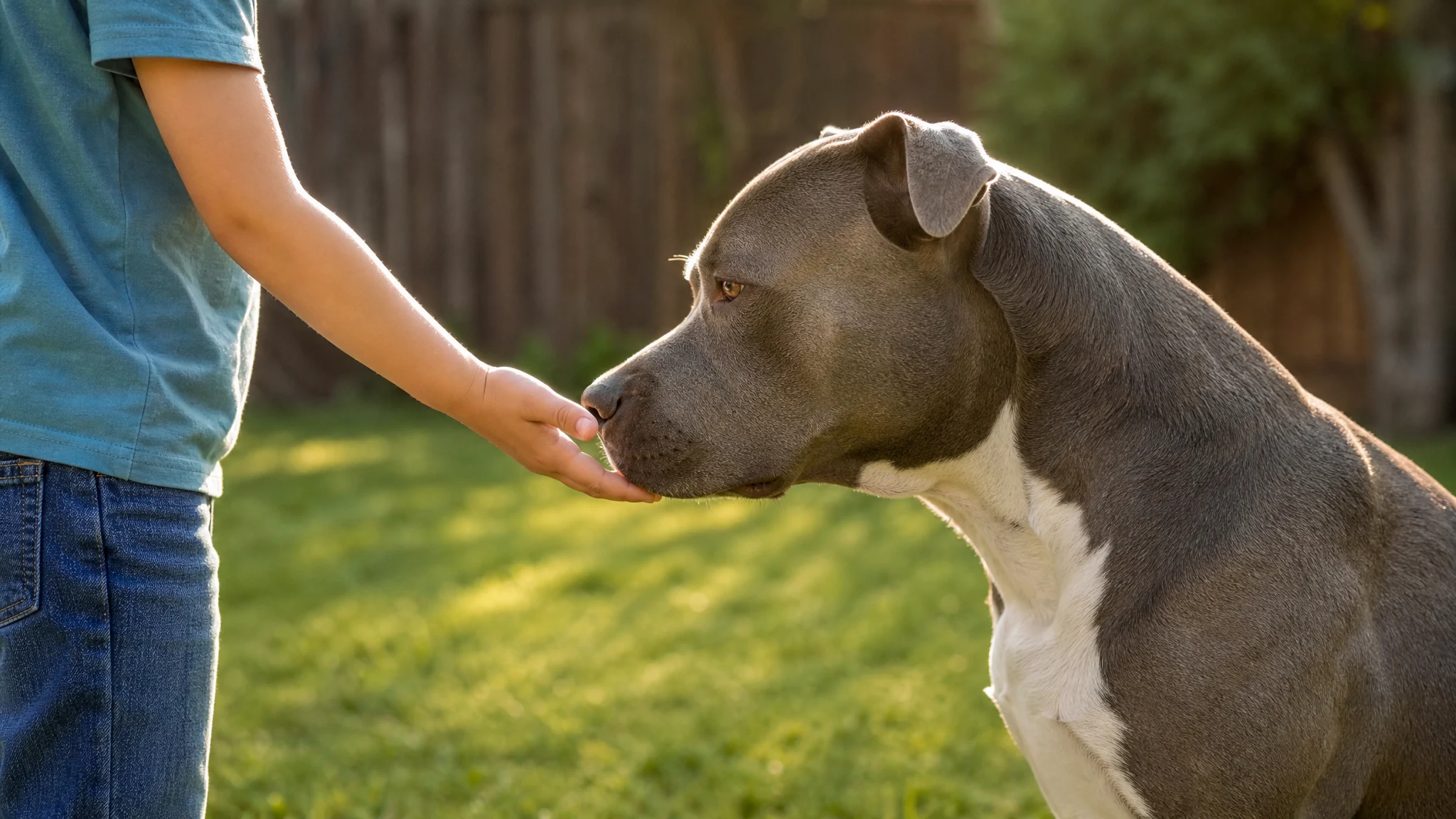
General training information. Every dog is an individual; for health or behavior concerns, see your veterinarian.
Good American Pit Bull Terrier socialization is not about making your dog love everyone. It is about teaching a strong, athletic dog to stay calm and make good choices around children, other dogs and new people.
The United Kennel Club (UKC) breed standard describes a breed with strength, confidence and a zest for life. It also says the breed needs an owner who carefully socializes and obedience trains it. This guide shows you how to do that, one step at a time.
What the breed standard says about temperament
Start with what the UKC says, because it shapes the plan. The standard describes the American Pit Bull Terrier as eager to please and very friendly, even with strangers. That is why the UKC notes the breed is not the best guard dog.
On children, the UKC says the breed has always been noted for its love of children. That is a statement about the breed's history, not a promise about your dog. Individual dogs vary, and a dog that has never met a toddler needs to be taught how.
On other dogs, the UKC is just as direct: most American Pit Bull Terriers show some level of dog aggression. That does not mean every dog will fight. It means you should plan for dog-to-dog manners from the first week, not hope they appear on their own.
Are American Pit Bull Terriers good with kids?
People often ask whether American Pit Bull Terriers are good with kids. The UKC points to a long record of affection for children. The honest, trainer-level answer is that the breed's temperament gives you a good starting point, and your management and training decide how it plays out.
This is a muscular, agile dog that can knock over a small child by accident. Many problems start with exuberance, not ill will. Jumping, mouthing and zoomies near a toddler are the usual trouble spots, and all of them can be taught away.
Materials you will need
- A flat buckle collar or a well-fitted harness, plus a standard 6-foot leash. Skip prong, choke and shock collars. They do not fit reward-based training and can make fear and reactivity worse.
- Small, soft, high-value treats your dog loves, cut into tiny pieces.
- A treat pouch so rewards are fast.
- A secure yard or a long line for safe practice. The UKC calls the breed a strong climber, so check your fencing before you rely on it.
- Baby gates, an exercise pen or a crate for management.
- A chew or stuffed toy for calm time.
- A calm, vaccinated, dog-friendly adult dog and a few patient helpers. Ask your veterinarian when your puppy is ready for outings.
Step 1: Build a foundation before you add distractions
Before you introduce your dog to anything exciting, teach a few basics at home. A name response, sit, a hand target and a reliable "look at me" give you tools to use when things get busy.
Pay with treats, praise and play. Keep sessions short and end on a win. The American Veterinary Society of Animal Behavior (AVSAB) supports reward-based methods, and they fit this breed well. The UKC describes it as eager to please, so use that.
The full set of basics is in our complete American Pit Bull Terrier training guide. Work through it alongside this plan.
Step 2: Use the puppy window well
An article from the American Dog Breeders Association (ADBA) says early socialization matters most between eight weeks and six months of age. It also says calm early exposure builds confidence. That fits what most trainers see.
Aim for many short, pleasant experiences. Let your puppy watch people, cars, bikes and strollers from a comfortable distance. Pair each new thing with a treat. If the puppy freezes, hides or won't eat, you are too close. Back up and make it easier.
If you have an adult dog, the same steps apply. Go slower, keep distance larger, and expect it to take longer. Adults can learn too.
Step 3: Teach your dog to greet strangers calmly
Because the breed is described as very friendly with strangers, the usual problem is too much enthusiasm, not suspicion. Your goal is a dog that stays on the floor and waits to be greeted.
- Ask a helper to stand still and ignore the dog.
- Walk up on a loose leash. If your dog pulls or jumps, stop and wait.
- When all four paws are down, reward and let the helper offer a calm pet under the chin or on the chest.
- If your dog jumps, the helper turns away. Try again from a bit farther back.
- Practice with different people: men, women, hats, glasses, people in uniforms, people using canes or walkers.
You are allowed to say no. Tell people your dog is in training and keep greetings optional. A dog does not need to meet everyone.
Step 4: Introduce your dog to children safely
This step needs the most care. Plan every meeting, and always supervise.
- Teach the children first. Show them to stay calm, avoid hugging, pulling ears or tails, and never bother the dog when it eats, chews or sleeps.
- Start with distance. Let your dog see kids playing from across a yard or park and reward calm behavior.
- Keep your dog on leash for first meetings. Let a child stand still and offer a treat on a flat palm.
- Keep it short. End the visit while your dog is still relaxed.
- Build up slowly. Move toward sitting together, with you holding the leash and rewarding calm behavior.
At home, an adult must be actively watching whenever a child and the dog share space. Not in the next room. Not looking at a phone. When you cannot watch, use a gate, a pen or a crate.
Give your dog a quiet place the kids are not allowed to enter. Dogs that can retreat tend to cope better.
The UKC does not flag herding or guarding behavior toward children for this breed, and it calls the breed a poor guard dog. Still, any dog can get overexcited around running, screaming kids. Teach children to walk, not run, near the dog while it is learning.
Step 5: Plan for American Pit Bull Terrier with other dogs
Handling an American Pit Bull Terrier with other dogs is where the UKC standard asks for the most realism. Most of these dogs show some dog aggression, and the breed is powerful. Treat dog socialization as a skill you build with care, not a free-for-all at the dog park.
Many trainers advise skipping off-leash dog parks for this breed. A crowded park is hard to control, and one bad moment can set your dog back or lead to injury. Choose controlled meetings instead.
- Parallel walks. Walk with a calm, known dog and its handler, with plenty of space between the dogs. Reward your dog for looking at you instead of the other dog.
- Close the gap slowly. Over several walks, reduce the distance as long as both dogs stay loose and relaxed.
- Short, leashed greetings. Keep leashes loose. Allow a brief sniff, then call your dog away and reward. Do not hold tight leashes, which can raise tension.
- Supervised play in a secure space. With a dog your dog already gets along with, let them play with leashes dragging or in a fenced area. Interrupt play that gets too rough, and give breaks.
Learn the signs of trouble: stiff body, hard stare, raised hackles, freezing, growling or a closed mouth with a tight face. When you see these, calmly increase distance. Do not punish a growl. It is a warning, and punishing it can teach a dog to skip the warning.
Be careful with food, toys and bones around other dogs. Feed dogs apart and pick up high-value items before guests arrive.
Step 6: Practice real-world settings
Once the basics hold, add real life one piece at a time. Try a quiet sidewalk, then a busier one. Try a patio at a pet-friendly shop at a slow time. Visit a friend's home with a calm dog.
Change only one thing at a time. If you add a new place and a new dog together, success gets harder to read and mistakes get bigger.
If your dog enjoys structured activity, consider a class. The UKC lists obedience, rally, tracking, agility, dock jumping and weight pulls among the activities for the breed. A well-run obedience or rally class can give you supervised exposure to dogs and people with clear rules.
Tips for success
- Keep your dog under threshold. Learning happens when your dog is calm enough to eat and think.
- Reward calm, not just tricks. Mark and treat moments when your dog settles, looks away from a trigger or lies down.
- Exercise first. The UKC describes a physically active, very agile breed, so a tired dog is easier to train. It gives no exact amount, so ask your veterinarian what suits your dog.
- Secure your yard. Because the breed is a strong climber, a gap in a fence can undo careful socialization.
- Be your dog's advocate. If a situation looks tense, leave.
Common mistakes to avoid
- Flooding. Dragging a nervous dog into a crowd teaches fear, not confidence.
- Relying on the dog park. Open, unpredictable play is a poor classroom for a breed with a known tendency toward dog aggression.
- Leaving kids and dogs alone together. Even a friendly dog needs an adult watching.
- Using harsh tools or corrections. Prong, choke and shock collars, alpha rolls and scruffing are not part of humane training and can cause harm.
- Assuming friendliness means no training is needed. A friendly dog that jumps on every stranger is still a problem.
- Stopping early. The puppy window matters, but adolescent and adult dogs need continued practice.
What results to expect
With steady practice, many owners find their dog becomes calmer around strangers, more manageable on walks and more comfortable around children who have been taught how to behave. Progress usually comes in small steps, with some bad days along the way.
Around other dogs, a realistic goal may be a dog that can pass others politely on leash and play with a few trusted friends. It may not mean off-leash play with every dog. Results depend on your dog's age, history and individual temperament, and no plan can promise a particular outcome.
When to get help
If your dog growls, lunges, snaps or stiffens around people or dogs, stop the practice that triggers it and get professional help. Look for a trainer or behavior consultant who uses reward-based methods in line with AVSAB guidance. Ask them how they work before you book.
Sudden changes in behavior can have a physical cause, such as pain. Talk with your veterinarian before assuming it is only a training problem.