Common American Pit Bull Terrier Behavior Problems and the Instinct Behind Each
General training information. Every dog is an individual; for health or behavior concerns, see your veterinarian.
Most American Pit Bull Terrier behavior problems are not signs of a bad dog. They are normal behavior from a strong, athletic, people-loving dog that has not yet been taught what to do instead.
This guide walks through the problems owners report most, the instinct behind each one, and a reward-based plan for each. Individual dogs vary, so treat every plan as a starting point and adjust to the dog in front of you.
What the breed was built to do
Behavior makes more sense when you know the job. The United Kennel Club (UKC) breed standard says the American Pit Bull Terrier was developed in England, Ireland and Scotland from Bulldog and Terrier crosses. Immigrants brought the dogs to the United States, where they worked as catch dogs for semi-wild cattle and hogs, hunted, drove livestock and lived as family companions.
The same standard describes a breed with strength, confidence and zest for life. It calls the dogs eager to please, physically active, muscular and very agile. It also says the breed has always been noted for its love of children and is very friendly, even with strangers.
It adds a caution. According to the UKC, most American Pit Bull Terriers show some level of dog aggression, and the breed needs an owner who carefully socializes and obedience trains it. Keep both halves in mind: a warm, eager dog and a powerful dog that needs a plan.
Materials you will need
- A well-fitted flat collar or a front-clip harness, plus a sturdy 6 foot leash. Skip prong, choke and shock collars. They add pain and fear, which makes behavior worse.
- Small, soft treats your dog loves, cut pea-sized so you can reward often.
- A few durable chew toys and a food puzzle or snuffle mat.
- A crate or a gated resting area.
- A secure fence, or a long line for outdoor practice.
- A treat pouch and a notebook to track what triggers your dog and how far away it is when the dog reacts.
Training methods here follow the humane, reward-based approach supported by the American Veterinary Society of Animal Behavior (AVSAB). You reward what you want, manage the setting so mistakes are less likely, and never use pain or intimidation.
The step-by-step plan
Step 1: Reactivity and dog aggression toward other dogs
The instinct: The UKC standard states that most of these dogs show some dog aggression, and the breed's history as a working and fighting-era dog helps explain why. Treat it as a likely trait to plan for, not a surprise.
Prevention: The ADBA article on early puppy socialization says the key window runs from eight weeks to six months of age, and that calm early exposure builds confidence. Use that window for quiet, controlled meetings with calm, vaccinated, friendly dogs, and keep each one short and pleasant. Do not rely on dog parks. Crowded off-leash settings are a poor place to learn.
Training plan:
- Find your dog's threshold, the distance at which it notices another dog but can still take a treat.
- Stay at that distance. When your dog looks at the other dog, say "yes" and feed a treat.
- Reward every calm look, then reward turning back to you.
- Close the distance slowly over many sessions, only when your dog stays relaxed.
- Teach a U-turn cue so you can leave a situation calmly before your dog reacts.
Never punish growling or lunging. The dog is telling you it is over its limit, and punishment can hide the warning without fixing the feeling.
Step 2: Pulling on the leash
The instinct: The UKC describes a muscular, powerful, active dog, and a dog built for hauling and gripping will lean into pressure. The UKC even lists weight pulls among the sports for the breed. Pulling is a natural result of that build plus excitement.
Prevention: Start loose-leash habits with a small puppy, before the dog has the strength to win. A front-clip harness reduces leverage without causing pain.
Training plan:
- Practice in a quiet hallway or yard first.
- Reward your dog every time it stands or walks beside you with a loose leash.
- The moment the leash goes tight, stop. Wait for slack, then mark and reward and move on.
- Add distractions one at a time: a toy on the ground, then a person, then a street.
- Give the dog a job on walks, such as sniffing breaks you release with a cue. Sniffing is the reward.
Step 3: Jumping on people
The instinct: The UKC says the breed is very friendly, even with strangers, and describes a zest for life. A dog that loves everyone wants to reach faces. Jumping is a greeting, and a strong dog can knock over a child or an older adult.
Prevention: Never reward jumping with attention, even by pushing the dog away. Greet your own dog calmly at the door.
Training plan:
- Teach "sit" as the only way to get attention.
- Ask visitors to wait until all four paws are on the floor, then pet.
- If the dog jumps, the person turns away for a few seconds, then asks for a sit again.
- Practice with a leash on at first so you can guide the dog without grabbing it.
- Reward the sit generously, because the greeting itself is what the dog wants.
Step 4: Escaping and fence climbing
The instinct: The UKC lists the breed as a strong climber and calls it very agile. A dog bred to chase and catch livestock will go over a fence for something interesting.
Prevention: The UKC notes that secure fencing is needed. Check the fence line regularly for gaps, dig spots and anything the dog could use as a step. Do not leave your dog outside alone for long stretches. A loose, friendly, strong dog can still frighten neighbors or run into traffic.
Training plan:
- Supervise every yard session at first and reward your dog for coming back to you.
- Practice a reliable recall on a long line before any off-leash freedom.
- Keep the yard interesting: scatter treats, add a digging spot where digging is allowed, and rotate toys.
- If the dog still tests the fence, shorten unsupervised time and ask a trainer to help.
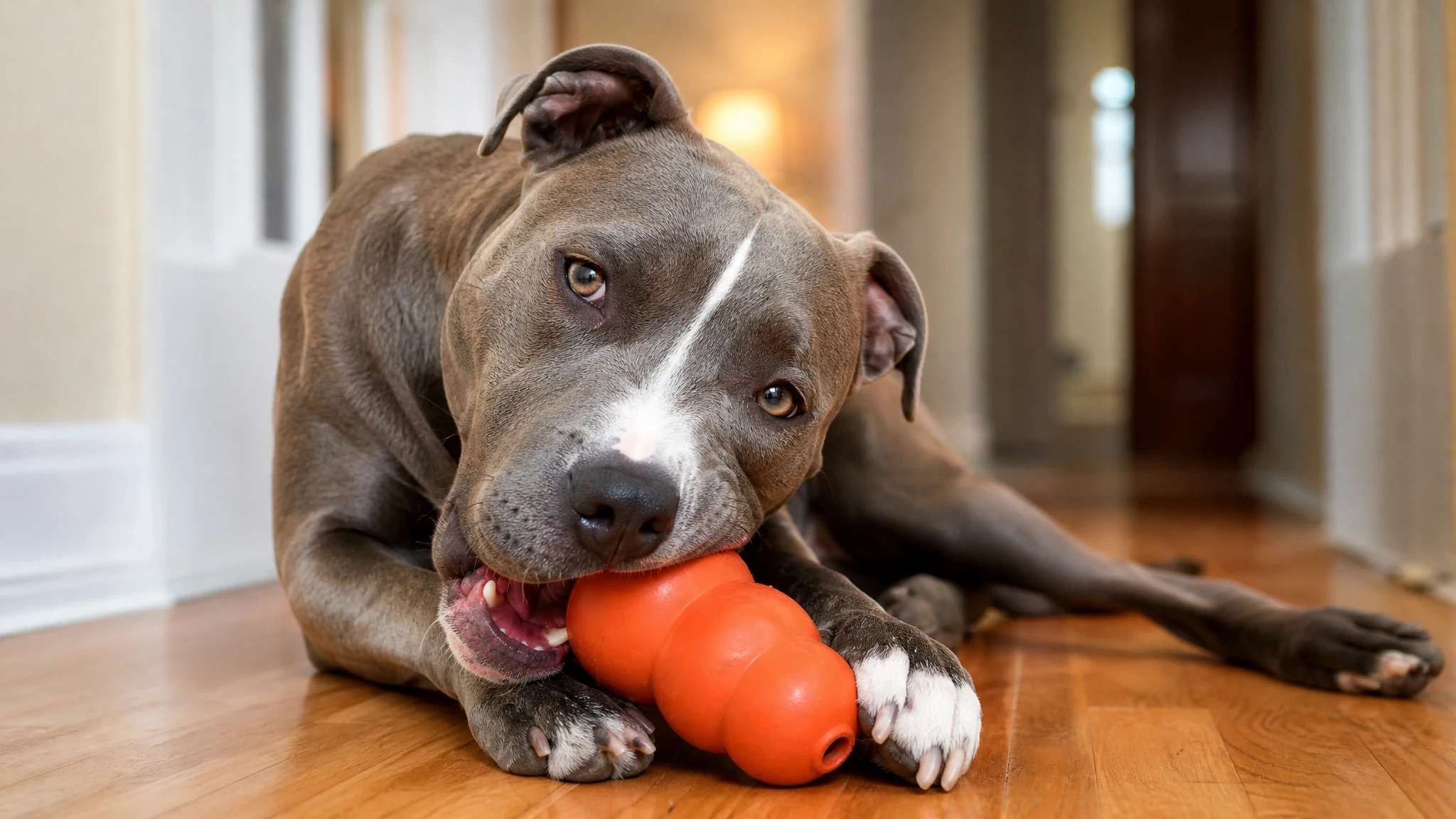
Step 5: Destructive chewing and boredom behavior
The instinct: An active, muscular, eager breed has energy and jaws that need a job. The UKC gives no exercise amount, so check with your veterinarian about the right amount for your individual dog's age and health.
Prevention: Offer daily exercise, mental work and approved chews. Puppy-proof the house and use a crate or gated room when you cannot watch.
Training plan:
- Give meals in food puzzles or scatter them for a sniffing game.
- Trade, never grab. When your dog has the wrong item, offer a treat or better toy and say "drop it" as it lets go.
- Add a short training session or two each day. Sit, down, touch and "leave it" all count.
- Consider a sport. The UKC lists obedience, rally, tracking, agility, dock jumping and weight pulls for the breed, and the ADBA runs weight pulls and conformation shows. Check each group's rules for current requirements.
Step 6: Rough play and mouthiness
The instinct: A breed with a catch-dog past tends to play hard, grab and tug. Puppies explore with their mouths, and enthusiasm can outrun manners.
Prevention: Supervise all play with children. The UKC says the breed is noted for its love of children, but a strong, excited dog and a small child still need an adult nearby.
Training plan:
- When teeth touch skin, end the game calmly for 20 to 30 seconds.
- Offer a toy and restart the play when the dog is calmer.
- Teach "take it" and "drop it" so tug has rules.
- Reward calm behavior around kids before play starts.
Tips for every problem
- Manage first, train second. A gate, a leash or a closed door keeps the dog from practicing the problem while you teach the fix.
- Keep sessions short. Five minutes, a few times a day, beats one long session.
- Use the eager-to-please streak. The UKC describes the breed this way, and an ADBA article quotes a behaviorist praising its trainability. Reward heavily and the dog usually works hard for you.
- Be consistent. Everyone in the house uses the same cues and rules.
- Keep learning going all of life. The early socialization window matters most, but adult dogs still benefit from regular, calm exposure.
For the foundation behind all of these steps, see our complete American Pit Bull Terrier training guide.
Common mistakes to avoid
- Skipping socialization, then hoping for the best. The UKC says the breed needs careful socialization. Waiting past the early window makes the work harder.
- Using the dog park as a training tool. Chaotic off-leash meetings can create the very problem you want to prevent.
- Using pain or fear. Prong, choke and shock collars, alpha rolls and scruffing are not part of humane training and can make fear and aggression worse.
- Punishing a warning. A growl is information. Remove the dog from the situation and look at the cause.
- Trusting the friendly reputation too far. A dog that loves people can still react to other dogs, and the other way around.
- Underestimating strength. Plan leash handling, fencing and visitor greetings around a powerful dog, not a small one.
- Expecting a guard dog. The UKC says the breed is very friendly even with strangers, so it is not the best guard dog.
What results to expect
With steady practice, many owners see a calmer greeting, better leash manners and fewer chewed belongings within several weeks. Reactivity and fence-climbing usually take longer, often months, and some dogs may always need management around other dogs.
No plan can promise a specific outcome, because age, history, health and temperament all play a part. Track progress in your notebook. If the distance to other dogs shrinks and your dog recovers faster, the plan is likely working.
When to call a certified trainer or a veterinary behaviorist
Get professional help sooner rather than later if you see any of these:
- Your dog has bitten or tried to bite a person or another dog.
- Reactivity is getting worse or is hard to interrupt.
- Your dog guards food, toys or resting spots with stiffness, growling or snapping.
- A behavior change appears suddenly, such as new aggression, restlessness or house soiling.
- You feel unsafe or can no longer walk your dog.
Start with your veterinarian. Pain, illness and other medical issues can change behavior, and only a veterinarian can diagnose them or discuss medication. If the vet finds no medical cause, a certified, reward-based trainer can coach you in person. A veterinary behaviorist is a veterinarian with extra training in behavior and is the right choice for severe or complex cases. Ask any trainer how they train, and walk away from anyone who recommends shock, prong or choke collars or dominance methods.
This breed often rewards patient owners with a loyal, funny and affectionate companion. Plan for the strength and the dog-to-dog challenges, and enjoy the rest.