American Pit Bull Terrier Sports and Jobs: Putting the Breed's Instincts to Work
General training information. Every dog is an individual; for health or behavior concerns, see your veterinarian.
A bored American Pit Bull Terrier is a lot of dog to live with. A dog with a job is a different animal. The breed was built to work, and giving that energy a purpose is one of the kindest things you can do for it.
This guide walks you through choosing an activity, preparing your dog, and starting out. It covers American Pit Bull Terrier sports and the idea of an American Pit Bull Terrier working dog in plain, practical steps. Every dog is an individual, so treat what follows as a starting plan, not a promise.
Why the Breed Takes to Work
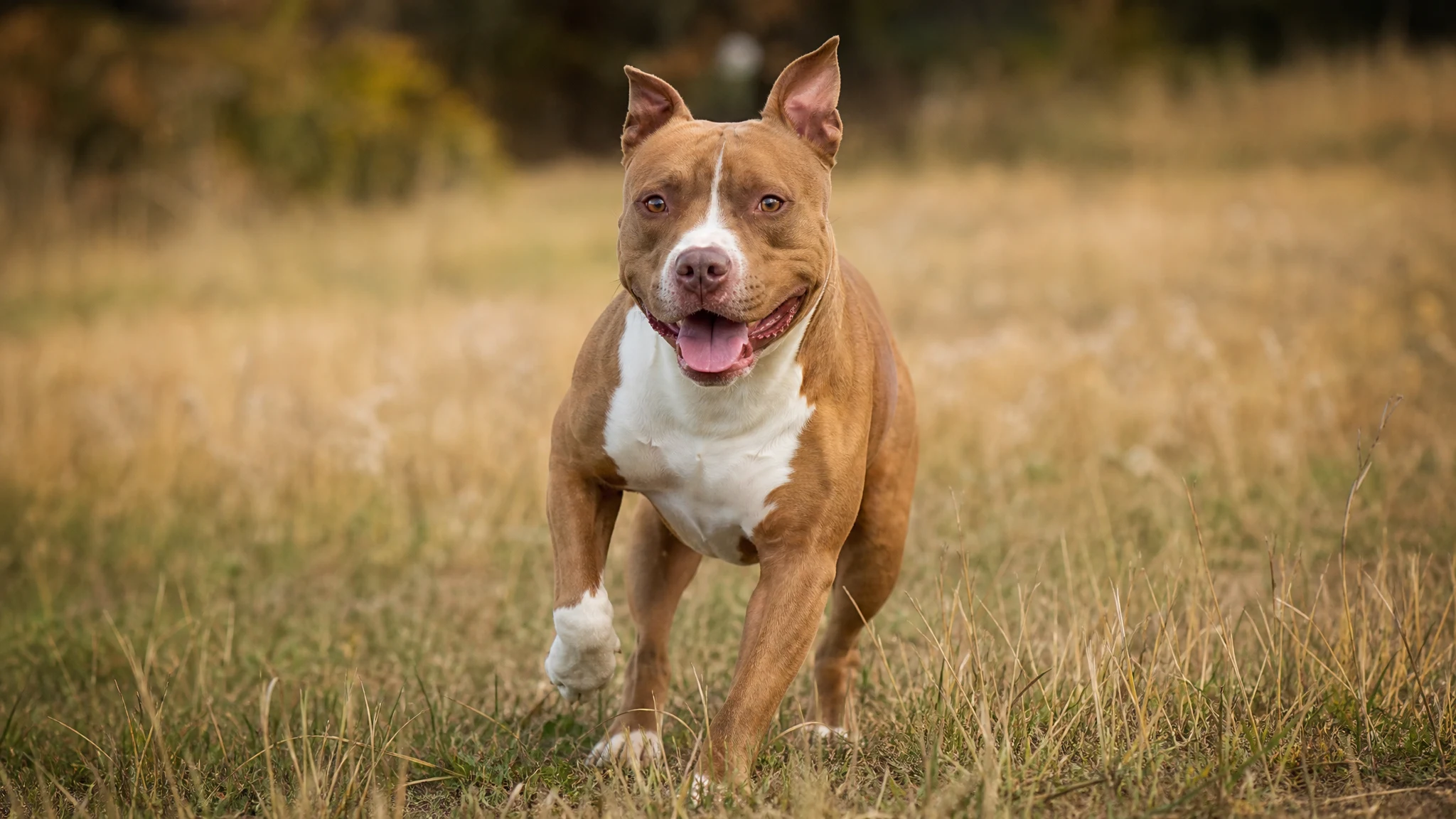
The United Kennel Club (UKC) breed standard describes the American Pit Bull Terrier as a physically active, muscular and very agile dog with strength, confidence and a zest for life. It also calls the breed eager to please.
The history fits. The UKC says the breed was developed in England, Ireland and Scotland from Bulldog and Terrier crosses and came to the United States with immigrants. Its original jobs included catching semi-wild cattle and hogs, hunting, and driving livestock. It also worked as a family companion.
You do not need cattle or hogs to honor that background. Modern sports give a dog the same mix of physical effort, focus and teamwork with its person.
The Sports and Jobs on the Menu
The UKC lists these activities for the breed: Obedience, Rally Obedience, Tracking, Agility, Lure Coursing, Dock Jumping, Weight Pulls and Conformation. The American Dog Breeders Association (ADBA) also runs conformation shows and weight pulls, with Champion and Grand Champion titles in conformation and Ace and Ace of Ace titles in weight pull.
| Activity | What it is | Why it can suit the breed |
|---|---|---|
| Obedience and Rally Obedience | Handler and dog perform set exercises, either in a ring or along a course of signs | The UKC calls the breed eager to please and says it needs an owner who obedience trains carefully |
| Tracking | The dog follows a scent trail | Calm, nose-down work gives an energetic dog a mental outlet |
| Agility | The dog runs an obstacle course on cue | The UKC describes a very agile, muscular breed |
| Lure Coursing | The dog chases a mechanical lure over a field | It rewards speed and drive, but it puts dogs in a shared setting, so check the event rules |
| Dock Jumping | The dog leaps from a dock into water for a toy | It rewards athleticism and enthusiasm |
| Weight Pulls | The dog pulls a loaded sled or cart | Both the UKC and the ADBA run this event for the breed |
| Conformation | A judge compares each dog to the breed standard | The UKC and ADBA both hold shows, and dogs must be comfortable being handled |
Not every dog will love every sport. Some dogs live for the water. Others prefer to use their nose. Try a few before you commit.
What You Will Need
- A well-fitted flat collar or a comfortable harness, plus a standard leash
- Small, soft, high-value treats your dog loves, cut into pea-sized pieces
- A favorite toy for play rewards
- A treat pouch so rewards come quickly
- Secure fencing or a long line for safe practice outdoors
- Water, a collapsible bowl and a first-aid kit for training days
- A contact at your veterinary clinic for a pre-sport check
The UKC says the breed is a strong climber, so a fence that looks tall enough to you may not be tall enough for your dog. Check it before you train off leash in a yard.
Step-by-Step: Getting Started
Step 1: Check Your Dog's Health With a Veterinarian
Sports ask a lot of joints, muscles and hearts. Before you start anything involving jumping, running or pulling, ask your veterinarian whether your dog is ready. Puppies need special care because their bodies are still growing. Your veterinarian can tell you what is safe at your dog's age and build. Do not guess, and do not start hard work on a dog that seems sore.
Step 2: Build the Foundation First
Every sport sits on the same base: your dog can sit, lie down, wait, come when called and walk politely on a leash. If those skills are shaky, start there. The complete American Pit Bull Terrier training guide covers the basics step by step.
The UKC says the breed needs an owner who carefully socializes and obedience trains it. Treat that as the entry fee for any activity.
Step 3: Socialize Early and Keep It Calm
An ADBA article on early puppy socialization says the key window runs from eight weeks to six months of age, and that calm early exposure builds confidence. Introduce your puppy to new people, surfaces, sounds and settings at a pace the dog can handle, with treats and plenty of breaks.
If your dog is older, you can still work on confidence. Go slowly, keep sessions short and stop before your dog gets overwhelmed.
Step 4: Be Honest About Other Dogs
The UKC standard says most American Pit Bull Terriers show some level of dog aggression. That matters when you pick a sport. Crowded, close-contact settings are harder for some dogs than others.
Plan around this. Keep your dog on leash, give other dogs plenty of space, and learn your dog's early stress signals, such as stiffening, hard staring or lip licking. If your dog struggles around other dogs, talk with a qualified, reward-based trainer or behavior professional before you enter any group setting.
Step 5: Pick One Activity and Try It Gently
Choose the activity that matches your dog's personality and your own interests. A dog that follows its nose may enjoy tracking. A bouncy, confident dog may enjoy agility or dock jumping. A calm, strong dog may be a candidate for weight pulling.
Start with a beginner class or a trial session if one is offered. Watch first, without your dog if needed, so you know what the setting is like.
Step 6: Teach the Skills in Tiny Pieces
Break each skill into small steps and reward every bit of progress. For example, to teach a target on a mat, reward your dog for looking at the mat, then for stepping on it, then for staying on it. This kind of reward-based work matches the approach recommended by the American Veterinary Society of Animal Behavior (AVSAB).
Keep sessions to a few minutes. End on a success while your dog is still eager. A dog who finishes wanting more will come back happier next time.
Step 7: Add Distance, Duration and Distraction One at a Time
When your dog does a skill reliably, change only one thing at a time. Ask for a little more distance, or a little longer wait, or a bit more distraction. If your dog fails, make the next try easier. Failure usually means you moved too fast, not that your dog is stubborn.
Step 8: Find Events and Clubs
Look for organizations that recognize the breed. The UKC lists the sports above for the American Pit Bull Terrier, and the ADBA runs conformation shows and weight pulls. Check each organization's website for rules, registration steps and event calendars.
The AKC does not register the American Pit Bull Terrier, so do not assume its events are open to your dog. Check with the AKC and with any event host before you enter. Some training clubs and facilities also offer classes open to all breeds. Call and ask what a class involves and whether a trainer will be on hand to help with a first-time dog.
Specific rules, fees and eligibility change, and they differ by event. Read the current rules from the organizer before you pay or travel.
Step 9: Go to a Trial as a Spectator First
Before your first entry, attend an event without your dog if the organizers allow it. Watch how handlers warm up, how dogs wait their turn and how the day runs. You will learn more in an hour than from weeks of reading.
Step 10: Enter Your First Event With Low Expectations
Your first event is practice. Arrive early, give your dog time to settle, and bring water, treats and a mat for resting. Keep your dog away from crowds if it seems tense. If your dog is stressed, leaving early is a fine decision.
Tips for Success
- Reward often. Frequent rewards keep your dog excited and make learning clear.
- Use play as a reward. A short game of tug or fetch can work as well as food for many dogs.
- Warm up and cool down. A short walk before and after training is a gentle way to prepare the body. Your veterinarian can suggest more.
- Train in different places. A skill that works in your kitchen may fall apart at a field. Practice in new settings.
- Keep a log. Short notes on what worked help you spot patterns and progress.
- Mix mental and physical work. Scent games and puzzle toys use the brain without hard exercise.
Common Mistakes to Avoid
- Skipping the vet check. Hard activity on an unready body risks injury.
- Rushing a young dog. Puppies should not do repeated hard jumping or heavy pulling. Ask your veterinarian for the right timing.
- Ignoring stress signals. Yawning, panting, avoiding eye contact or freezing mean your dog needs space.
- Training when you are frustrated. Stop and try again later. Your dog reads your mood.
- Using harsh methods. Shock, prong or choke collars, alpha rolls, scruffing and dominance tactics can damage trust and increase fear. Stick with rewards.
- Skipping socialization. The UKC is clear that the breed needs careful socialization. Do not leave it for later.
- Overlooking the fence. A strong climber can leave a yard fast. Keep fencing secure.
The Working Dog at Home
You do not have to compete to give your dog work. Everyday jobs count: carrying a light backpack on walks once your veterinarian approves, finding hidden toys, fetching the slippers, or learning a new trick each week. The idea of an American Pit Bull Terrier working dog is really about purpose, and a purpose can be small.
The UKC notes the breed is very friendly, even with strangers, so it is not the best guard dog. A job that involves people and play suits that outgoing side far better than guarding does.
What You Can Reasonably Expect
With regular, positive practice, many dogs become more focused, more confident and easier to live with. Some owners find that a dog with a regular activity settles better at home. Results depend on the individual dog, its health, its history and how consistently you train.
Progress is rarely a straight line. Some weeks your dog will seem to forget everything. That is normal. Go back a step, keep it fun and keep rewarding.
If you ever worry about your dog's health, comfort or behavior, talk to your veterinarian or a qualified, reward-based trainer.