American Pit Bull Terrier Puppy Training Timeline: 8 Weeks to 2 Years
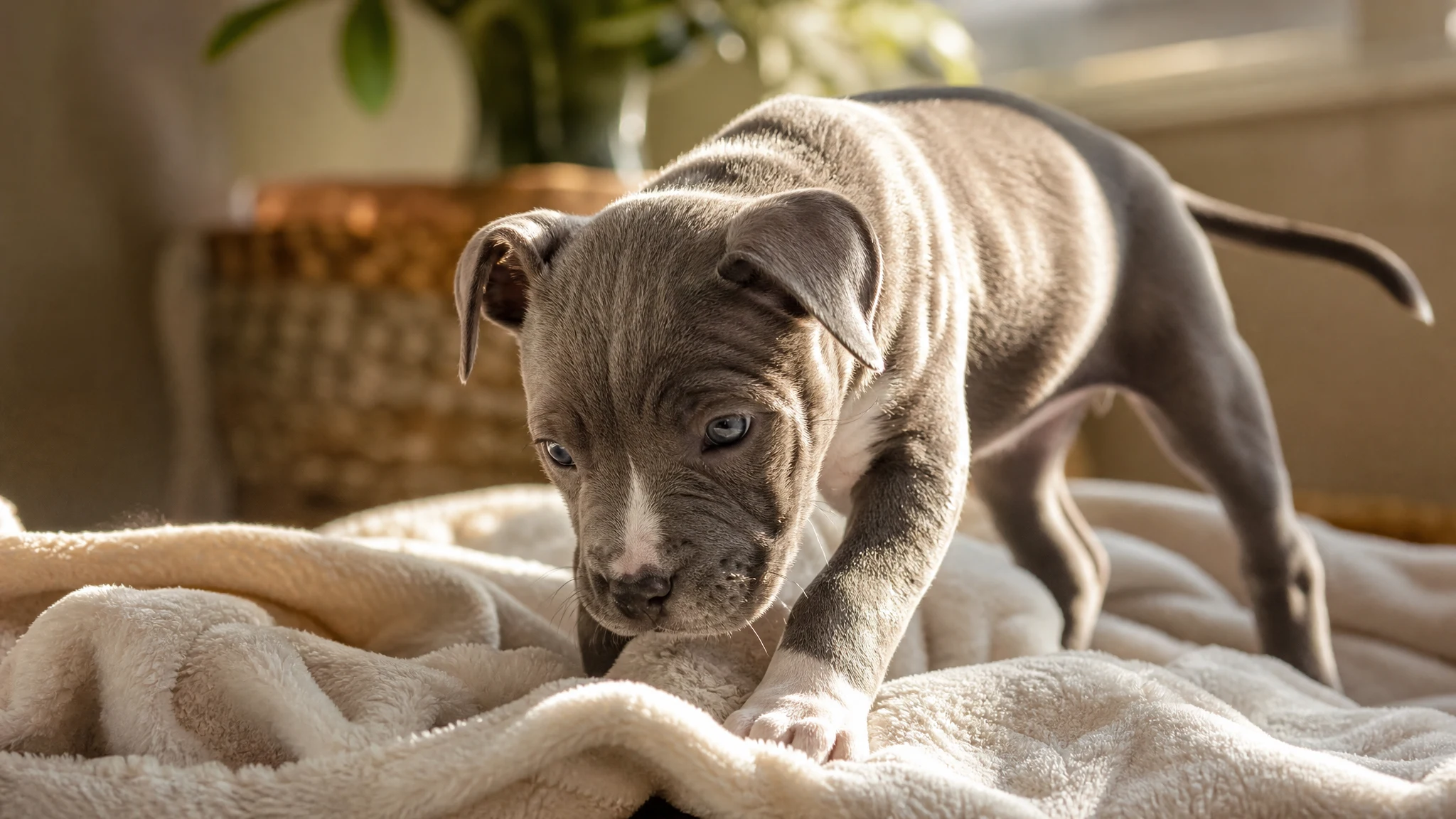
General training information. Every dog is an individual; for health or behavior concerns, see your veterinarian.
American Pit Bull Terrier puppy training is a two-year project, not a six-week class. The first months set the foundation. The teenage months test it. The second year is when good habits settle in.
This guide walks through that timeline stage by stage. It uses what the United Kennel Club (UKC) and the American Dog Breeders Association (ADBA) say about the breed. Where those sources are silent, we say so and point you to your veterinarian or a breed club rather than guess. Every dog is an individual, so treat the ages below as a rough map, not a deadline.
Key Takeaways
- The ADBA says the key socialization window runs from eight weeks to six months. Calm, early exposure builds confidence.
- The UKC says the breed needs an owner who carefully socializes it and trains it in obedience.
- The UKC standard says most American Pit Bull Terriers show some level of dog aggression, so plan dog introductions with care for the dog's whole life.
- The UKC describes a physically active, muscular, very agile breed and a strong climber, so secure fencing matters.
- Use reward-based methods only, in line with the American Veterinary Society of Animal Behavior (AVSAB).
- Questions about growth, joints, exercise amounts and health go to your veterinarian.
Table of Contents
- What the Breed Sources Tell Us
- Weeks 8 to 12: Arrival, House Training and First Lessons
- Months 3 to 6: Bite Inhibition, Manners and the Socialization Window
- Months 6 to 12: Adolescence
- Months 12 to 24: Maturity
- Exercise and Joint Care Along the Way
- A Sample Weekly Training Schedule
- Common Mistakes to Avoid
What the Breed Sources Tell Us
A good training plan starts with the dog you actually have. Here is what the registries say.
The UKC breed standard describes strength, confidence and zest for life. It calls the breed eager to please and very friendly, even with strangers. That is why the UKC says the breed is not the best guard dog. It also says the breed has always been noted for its love of children.
The same standard is honest about the harder side. It says most American Pit Bull Terriers show some level of dog aggression. It also says the breed needs an owner who carefully socializes it and obedience trains it.
The breed's history explains some of this. The UKC says it was developed in England, Ireland and Scotland from Bulldog and Terrier crosses. Its original jobs included catching semi-wild cattle and hogs, hunting, driving livestock and serving as a family companion. You can see that mix in a dog that wants to work with you, has plenty of drive and needs a plan.
What the sources do not say
Neither the UKC nor the ADBA material we reviewed gives an age at which the breed finishes maturing. They also give no breed-specific growth or joint-care schedule. The UKC gives no exercise amount either. So when this guide talks about those topics, it gives general, cautious advice and sends you to your veterinarian for specifics.
One retailer breed profile (Chewy, a secondary source) describes hip dysplasia as common in bully breeds and says it can lead to arthritis. Take that as a reason to ask your vet about screening and growth, not as a diagnosis of any dog.
Weeks 8 to 12: Arrival, House Training and First Lessons
Most puppies come home around eight weeks. This is the start of the socialization window the ADBA describes, so the first month is mostly about safe, calm experiences.
Set up the home
Before your puppy arrives, decide on the rules. Where does the puppy sleep? Which rooms are off limits? Which family member does what? Dogs learn faster when everyone is consistent.
- Get a crate sized for the puppy and make it a pleasant place with chews and soft bedding.
- Use baby gates to keep the puppy in the room you can supervise.
- Check your fence now. The UKC calls the breed a strong climber, so look for gaps, low spots and anything the puppy could use as a step.
House training basics
House training is about management first and teaching second. A young puppy cannot hold it for long, so you have to take the puppy out often.
- Take the puppy out after waking, after meals, after play and after drinking.
- Go to the same spot each time and wait quietly.
- Reward the moment the puppy finishes outside with a small treat and calm praise.
- If there is an accident, clean it with an enzymatic cleaner and move on. Never punish after the fact.
Many puppies need overnight trips outside at first. Ask your veterinarian how long your puppy can reasonably wait at each age, because it varies from dog to dog.
First training games
Keep sessions to a few minutes. Teach the name, sit, a hand target and coming when called. Use a soft treat and a happy voice. Build the crate habit with short stays that end before the puppy fusses.
First socialization steps
The ADBA article on early puppy socialization says calm early exposure builds confidence. Quality matters more than quantity. Let your puppy hear the vacuum, ride in the car, meet a few calm adults and walk on different floors. Stop if the puppy looks overwhelmed.
Ask your veterinarian where it is safe to take the puppy before vaccinations are complete. Your own yard, a friend's quiet home and being carried in public places are often easier than the ground at a busy park.
Months 3 to 6: Bite Inhibition, Manners and the Socialization Window
This is the busiest stretch of the American Pit Bull Terrier puppy training schedule. The ADBA says the key window runs from eight weeks to six months, so every week counts. It is also when teething and mouthing peak.
Bite inhibition
All puppies mouth. The goal is to teach a soft mouth, not to stop all contact overnight. This is the humane, reward-based way to do it:
- When teeth touch skin, say "ouch" in a calm voice and pause the play for a few seconds.
- Offer a chew toy and praise the puppy for taking it.
- If the puppy gets wound up, end the game and give a short break in the crate or pen with a chew.
- Keep hands out of the puppy's face during rough play.
Do not hit, pin or scruff a puppy. Those methods are not recommended by the AVSAB and they can make mouthing worse by adding fear or frustration.
Manners that pay off for life
This is the age to build the habits you will want in an adult with a muscular build. A strong adult that pulls, jumps or lunges is much harder to manage than a puppy that does it.
- Leash walking: reward the puppy for staying beside you. Stop when the leash goes tight and start again when it loosens.
- Four on the floor: reward sitting for greetings and ignore jumping.
- Come when called: practice indoors, then in the yard on a long line. Never call the puppy for something unpleasant.
- Settle on a mat: reward calm behavior so your dog learns to switch off.
- Handling: practice touching paws, ears, mouth and collar. Pair each touch with a treat.
Meeting other dogs, with care
Because the UKC says most dogs of this breed show some dog aggression, how you introduce other dogs matters more than how many you introduce. The aim is calm, positive experiences, not free-for-all play.
- Choose a few known, friendly, vaccinated dogs and keep meetings short.
- Watch body language. Stiff posture, hard staring and raised hackles mean it is time to calmly move apart.
- Skip crowded dog parks. Controlled one-on-one meetings give you much more control.
- Reward your puppy for looking at another dog and then looking back at you.
A puppy class run on reward-based methods can be a good way to practice, with a structured setting and a trainer watching. Ask the instructor how they handle off-leash play before you sign up.
Teething and chewing
Expect chewing as adult teeth come in. Rotate chew toys, supervise, and keep shoes and cords out of reach. If your puppy seems to be in pain or you notice problems with the teeth, call your veterinarian.
Months 6 to 12: Adolescence
After the socialization window closes, many owners notice a change. A puppy that came when called at four months may suddenly act as if it has never heard the word. This is normal adolescence, and it tests your patience more than anything else in the first year.
The ADBA material and UKC standard do not give a breed-specific description of adolescence, so treat this section as general guidance. Every dog differs.
What you may see
- Selective hearing and testing of rules the puppy already knew.
- More energy and a stronger pull on the leash.
- New reactions to things the puppy used to ignore.
- A shift in how the puppy greets other dogs.
How to respond
Go back to basics. Shorten the distance, raise the reward value and keep sessions upbeat. Do not escalate to harsh methods. The AVSAB position is that punishment-based methods can increase fear and aggression, and that is the last thing you want in a breed the UKC says needs careful socialization.
- Keep socializing. The ADBA window may have closed, but good experiences still matter. Keep them calm and planned.
- Watch dog interactions closely. Because dog aggression is common in the breed per the UKC, an adolescent that used to play happily may start to show less tolerance. Do not wait for a fight. Increase distance, work with a qualified reward-based trainer and consult your veterinarian if behavior changes suddenly.
- Keep the fence secure. A bigger, stronger adolescent can test a barrier a puppy could not.
- Use a long line. Practice recall in safe areas without giving up control.
Spay and neuter timing
Timing is a medical decision. Ask your veterinarian what is right for your dog. We do not give a recommended age here.
Months 12 to 24: Maturity
By the first birthday your dog may look grown. Looks can mislead. The sources we reviewed do not say at what age the breed finishes maturing, so do not assume your dog is done at 12 months. Many dogs keep filling out and settling mentally into the second year.
For reference, the UKC standard lists mature males at 18 to 21 inches at the withers and 35 to 60 pounds in good condition. Mature females are 17 to 20 inches and 30 to 50 pounds. Your veterinarian can tell you whether your own dog is at a healthy weight.
Turn the basics into habits
This is the time to proof what you taught. Practice sit, down, stay, come and loose-leash walking in new places and around more distractions. Increase one difficulty at a time: distance, duration or distraction, but not all three.
Give the dog a job
The UKC says the breed was developed to work, and it lists several activities that suit it: obedience, rally obedience, tracking, agility, lure coursing, dock jumping, weight pulls and conformation. The ADBA runs conformation shows and weight pulls with Champion, Grand Champion and Ace titles.
You do not need to compete. Even a simple training game or a sniff walk gives the dog a task. If you do want to try a sport, contact the club that runs it and ask about age limits and safety rules. For a young, still-growing dog, ask your veterinarian before starting anything that involves jumping or heavy pulling.
Lifelong management
Even a well-trained adult needs management. Because the UKC says most dogs of this breed show some dog aggression, keep the leash on in public, supervise dogs at home and do not rely on training alone to prevent a problem. A dog that is friendly with strangers and loves children, as the UKC describes, may still need careful handling around other dogs.
A retailer breed profile (Chewy) gives a life expectancy of 12 to 14 years, but it is a secondary source and the UKC page does not state one. Ask your veterinarian what to expect for your own dog.
Exercise and Joint Care Along the Way
The UKC describes a physically active, muscular, very agile breed but gives no exercise amount. A retailer profile suggests one to two hours of intense activity a day, but that is a secondary, unverified figure and not written for a growing puppy.
Here is a cautious approach until your vet advises otherwise:
- Keep puppy exercise short and varied. Several short walks and play sessions are easier on a growing body than one long outing.
- Avoid repetitive high impact in young puppies. Skip long runs on hard ground, forced jogging and repeated jumping from heights until your vet says the dog is ready.
- Use brain games. Food puzzles, scent games and short training sessions tire a dog without stressing the joints.
- Watch for limping or stiffness. Hip dysplasia is described as common in bully breeds by the Chewy profile. Any limp, bunny hopping or reluctance to rise is a reason to call your veterinarian.
- Keep your dog lean. Ask your veterinarian for a target weight and feeding plan.
We found no breed-specific growth or joint-care guidance in the registry material. Ask your veterinarian about screening, supplements and how your puppy is developing. We do not give doses or recommend products.
A Sample Weekly Training Schedule
A realistic American Pit Bull Terrier puppy training schedule uses short, frequent sessions. Here is one way to organize a week for a puppy in the three to six month range. Adjust it to your puppy and your household.
| Day | Focus | Length |
|---|---|---|
| Monday | Sit, down and name games; crate practice | Three 5-minute sessions |
| Tuesday | Loose-leash walking in the yard and on the street | Two 10-minute sessions |
| Wednesday | Recall on a long line; handling practice | Two 5-minute sessions |
| Thursday | Planned social outing with one calm, known dog | One short meeting |
| Friday | Settle on a mat; chew time; food puzzle | Two 10-minute sessions |
| Saturday | New place or new sound, kept calm; puppy class if enrolled | One outing |
| Sunday | Rest, easy play and a short review of favorite cues | Light day |
Practice house training every single day. Each session should end on a success, even if that means going back to an easier cue.
Common Mistakes to Avoid
- Skipping socialization because the puppy seems friendly. The UKC says careful socialization is needed, and the ADBA says the early window matters most.
- Letting dogs "work it out." With a breed where the UKC says dog aggression is common, unsupervised dog meetings are a risk.
- Using harsh tools or methods. Shock, prong and choke collars, alpha rolls and scruffing are not part of humane training and the AVSAB advises against them.
- Over-exercising a puppy. More is not better for a growing body. Ask your vet.
- Quitting after puppy class. Adolescence and the second year are when habits get tested. Keep training.
- Trusting the fence. The UKC says the breed is a strong climber. Check the fence often and supervise outdoor time.
- Expecting a guard dog. The UKC says the breed is very friendly even with strangers and not the best guard dog.
No timeline can promise a particular result. Dogs differ, and consistency, patience and good management matter more than any calendar. If you run into aggression, fear or sudden behavior changes, talk to your veterinarian and a qualified reward-based trainer or behaviorist.
Sources
- United Kennel Club (UKC): American Pit Bull Terrier breed standard
- American Dog Breeders Association (ADBA): The Importance of Early Puppy Socialization
- American Dog Breeders Association (ADBA): FAQ
- Chewy breed profile: American Pit Bull Terrier (secondary source)