Crate Training a American Pit Bull Terrier and Preventing Separation Anxiety
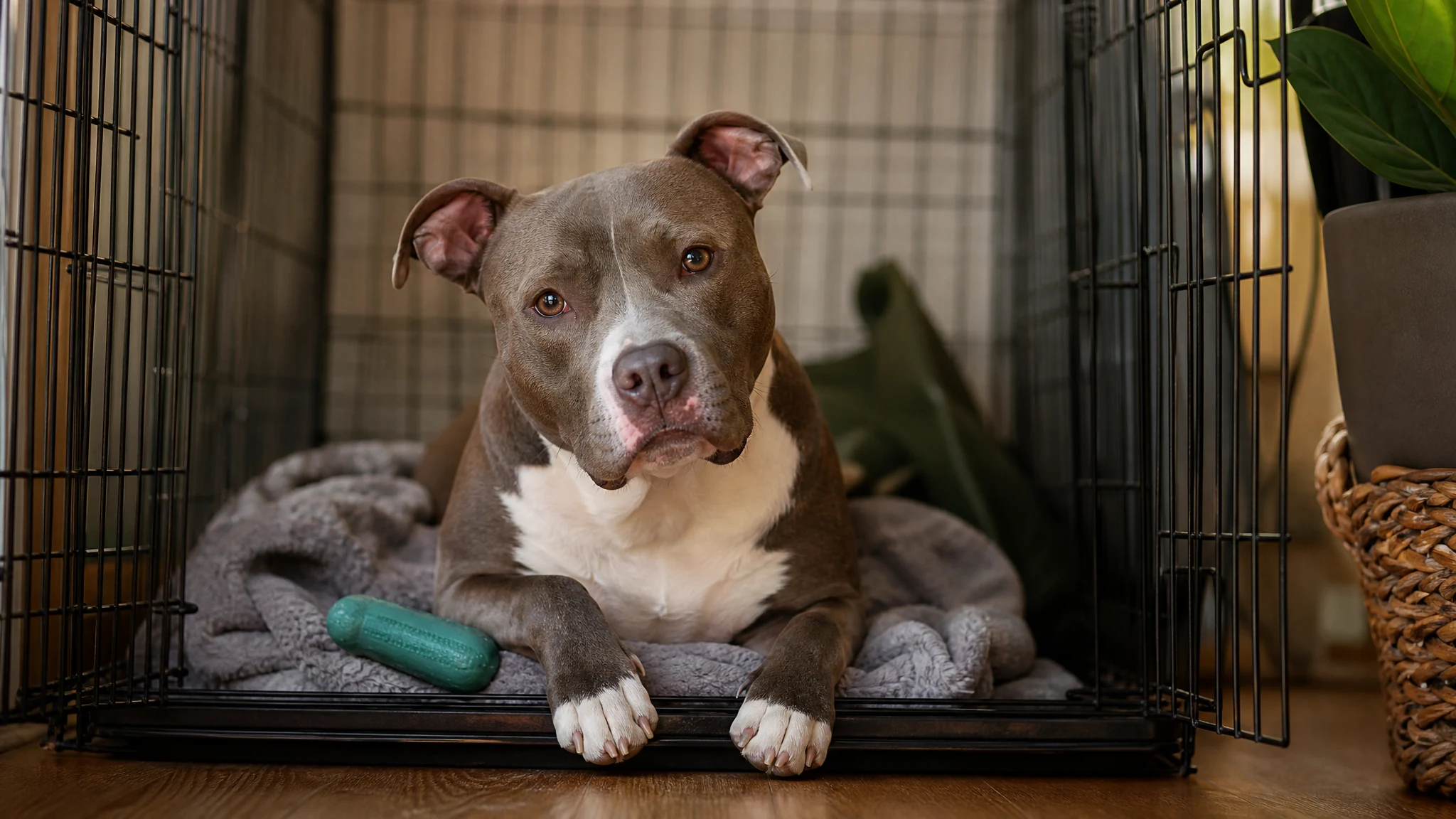
General training information. Every dog is an individual; for health or behavior concerns, see your veterinarian.
A crate can be a calm, safe den for your dog. It can also become a place of panic if it is introduced badly. With an American Pit Bull Terrier, the difference usually comes down to patience, small steps and plenty of rewards.
This guide walks you through American Pit Bull Terrier crate training from the first day, then shows how to build alone time slowly so your dog learns that being left is no big deal. It also covers the signs of separation distress and when to call your veterinarian.
Why the Crate Matters for This Breed
The United Kennel Club (UKC) breed standard describes the American Pit Bull Terrier as a physically active, muscular and very agile dog. It also notes strength, confidence and a zest for life. That is a lovely mix, but it means a bored or worried dog can do real damage to a home, and to itself.
The UKC says the breed is eager to please and has always been noted for its love of children. Many APBTs also form strong bonds with their people. That closeness is a joy, and it is also why teaching calm time apart early is worth the effort.
The UKC also says the breed needs an owner who carefully socializes it and trains it in obedience. Crate training fits right into that. Done well, it gives you a safe place for your dog during visitors, travel, recovery from a vet visit and the times you cannot supervise.
Individual dogs vary. Some take to a crate in a day, others need weeks. Go at your dog's pace.
Materials You Will Need
- A crate in the right size. See the sizing section below.
- A crate pad or washable blanket. Choose something thick enough to be comfortable and tough enough to survive a strong chewer.
- Small, soft treats. Pea-sized pieces work best, so you can reward often without overfeeding.
- Safe chew items or a stuffed food toy. Pick items sized for a powerful jaw and replace them when worn.
- A secure place for the crate. A quiet corner of a room where the family spends time is a good start.
- A baby gate or exercise pen. This helps with practice sessions and keeps a young dog safe between crate breaks.
- A timer or phone. You will track short practice sessions.
You do not need anything fancy. Skip any tool that works through pain, fear or force. Reward-based training, in line with the American Veterinary Society of Animal Behavior (AVSAB), is the approach used throughout this guide.
Choosing the Right Crate Size
The UKC breed standard lists mature males at 18 to 21 inches at the withers and 35 to 60 pounds in good condition. Mature females are listed at 17 to 20 inches and 30 to 50 pounds. That is a wide range, so measure your own dog instead of guessing from the breed alone.
A good crate lets your dog stand up without ducking, turn around easily and lie down stretched out. Anything much bigger can make a dog feel less secure, and a puppy may use the extra space as a bathroom corner.
- Measure your dog standing, from the tip of the nose to the base of the tail.
- Measure from the floor to the top of the head, or to the top of the ears if they stand up.
- Compare those numbers with the crate maker's own sizing chart, and check the weight rating on the label.
- If you have a puppy, ask the crate maker whether a divider panel is included, so you can buy for the adult size and shrink the space for now.
Because the UKC describes the breed as powerful and a strong climber, look for sturdy construction, solid latches and a crate that does not flex when pushed. Check the manufacturer's information for strength and escape resistance. Never leave a dog in a crate that is bending, with sharp edges, or that your dog has started to break out of.
Step-by-Step: Introducing the Crate
Step 1: Make the crate a nice place to be
Set the crate up with the door tied open so it cannot swing shut. Put the bedding inside. Toss a few treats near the entrance, then just inside, then toward the back. Let your dog walk in and out freely.
Do not push or lure with force. If your dog only sniffs and leaves, that is fine. Keep tossing treats and praise calmly.
Step 2: Feed meals near, then in, the crate
Move your dog's food bowl to the front of the crate. Over several meals, move it a little farther in until your dog is eating comfortably inside. This builds a simple link in your dog's mind: crate equals good things.
Step 3: Add a cue
Pick a short word such as "bed" or "crate." Say it once, then toss a treat inside. When your dog goes in on their own, mark the moment with a cheerful "yes" and give a reward. Repeat in short sessions, a few minutes at a time.
Step 4: Close the door for a few seconds
When your dog is going in happily, close the door for just a couple of seconds while feeding a treat through the bars. Open the door before your dog gets worried. Slowly lengthen the time, mixing in very short and slightly longer rounds so it stays unpredictable and easy.
Step 5: Stay in the room, then step away
Give a stuffed chew toy, close the door and sit nearby. Read a book. After a minute or two, stand up, take a step away, then return and reward calm behavior. Build up to moving around the room, then out of sight for brief moments.
Step 6: Let the door open on a quiet moment
Open the door when your dog is calm, not when your dog is whining or barking. Keep the release low key. If you make leaving the crate the most exciting part of the day, the crate itself starts to feel like something to escape.
Building Alone Time
Crate comfort and alone comfort are two different skills. A dog can love the crate when you are in the room and still panic when you leave. Teach them separately, then combine them.
An article from the American Dog Breeders Association (ADBA) on early puppy socialization says the key window runs from eight weeks to six months of age. It adds that calm early exposure helps build confidence. For a young puppy, that includes calm, brief practice at being apart from you, alongside meeting new people, sounds and surfaces at a gentle pace.
A simple ladder for alone time
- Short and easy. Leave the room for a few seconds while your dog has a chew. Come back before any worry shows.
- Add distance. Move to another room with a closed door for 30 seconds, then a minute, then a few minutes.
- Add departure cues. Pick up your keys, put on a coat, then sit back down. This takes the sting out of the things that predict you leaving.
- Step outside. Go out the door for a very short time, then return calmly. Keep arrivals and departures quiet.
- Stretch gradually. Increase time in small steps. If your dog struggles, go back to the last easy step and stay there longer.
Exercise before a practice session helps, as does a chance to relieve themselves. The UKC describes an active breed, so a dog who has had a walk and some mental work is more likely to settle. The UKC does not give an exercise amount, so ask your veterinarian what suits your dog's age and health.
Keep the routine predictable
Regular meals, walks and rest times help a dog relax. Try not to turn every goodbye into a big event. A calm word, a chew and a quiet exit are enough.
Tips for Success
- Keep sessions short and end on a win. Stop before your dog gets upset.
- Use the crate for rest, not punishment. If the crate predicts scolding, your dog will not want to go in.
- Vary the schedule. Do not only crate your dog when you leave. Crate at random times when you are home too.
- Rotate chews. A special item that only appears in the crate keeps it interesting.
- Stay secure. The UKC notes this breed is a strong climber and needs secure fencing. In the same way, check latches and crate strength regularly.
- Plan for the other pets. The UKC says most APBTs show some level of dog aggression. Keep the crate in a spot where other dogs cannot crowd it, and do not use it as a place to settle disputes.
Common Mistakes to Avoid
- Going too fast. Jumping from five minutes to a full workday is the most common reason crate training fails.
- Letting a crying dog out every time. If your dog learns that noise opens the door, the noise gets louder. Wait for a short pause, then open the door. If your dog is truly distressed, you went too fast, so step back a level.
- Long stretches in the crate. A crate is not a substitute for exercise, company or toilet breaks.
- Using correction tools. Shock, prong or choke collars, alpha rolls, scruffing and dominance methods can increase fear and make anxiety worse. They have no place in crate training.
- Making goodbyes dramatic. Big emotional exits and returns can teach your dog that being alone is a major event.
- Leaving unsafe items inside. Remove collars with tags, loose strings or anything that could catch or be swallowed.
Signs of Separation Distress
Some dogs are simply bored or excited when left. Others show real distress. Watch for patterns that start soon after you leave or even as you prepare to go.
- Barking, howling or whining that does not settle
- Pacing, drooling or panting while alone
- Scratching at doors, the crate or windows
- Chewing that focuses on exits, or injuries to the mouth or paws from trying to escape
- Toileting indoors in a dog that is otherwise house trained
- Refusing food or treats when left
- Frantic greetings, or following you from room to room
A camera or phone set up to record can show what happens after you go. Many owners are surprised to see whether the dog settles after a few minutes or stays upset for the whole time.
When to See a Veterinarian
Contact your veterinarian if your dog shows signs of distress when alone, hurts themselves in the crate, stops eating, or has toilet accidents that are new. These signs can have medical causes, and only a veterinarian can sort that out. Do not guess at a cause at home, and never give medication or supplements without veterinary direction.
Ask your veterinarian if a referral to a qualified behavior professional makes sense. Look for someone who uses reward-based methods in line with the AVSAB. If you are unsure about a trainer, ask what tools and techniques they use before you book.
What to Expect
Many owners find that a gradual, reward-based approach helps a dog accept the crate in a matter of days to a few weeks. Others need longer, especially with rescue dogs or dogs who have had bad experiences. Progress is rarely a straight line, so a bad day does not mean you have failed.
With steady practice, your dog may come to treat the crate as a favorite resting spot, and short absences may become routine. Early, calm exposure to being alone could lower the chance of problems later, but no method works for every dog. If your dog's distress is intense or does not improve, get professional help sooner rather than later.
Quick Recap
- Measure your dog and pick a sturdy, correctly sized crate.
- Make the crate a happy place with treats, meals and no pressure.
- Add a cue and close the door for a few seconds at a time.
- Build alone time in tiny steps, starting with seconds.
- Keep departures and returns calm.
- Watch for signs of distress and call your veterinarian if you see them.